What Was the Art Work in Humorous Phases of Funny Faces Created With?
Humorous Phases of Funny Faces: The First Blithe Moving-picture show?
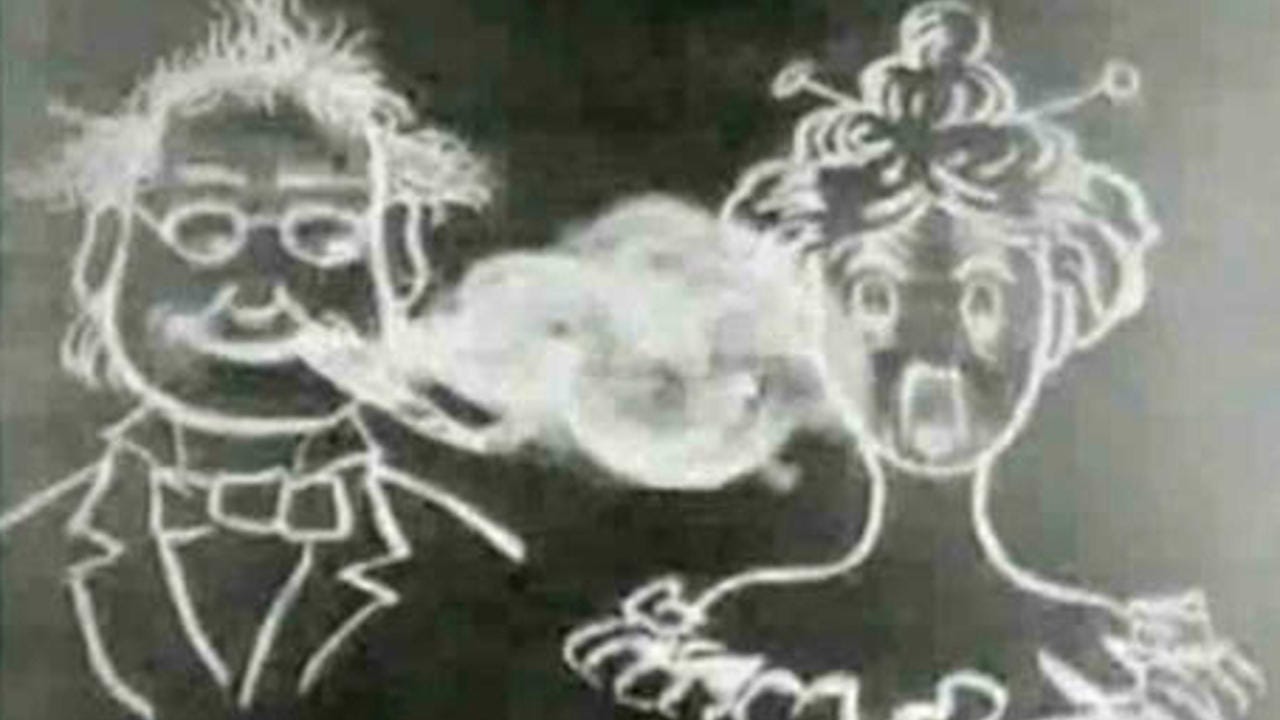
Note: This is the fortieth in a serial of historical/disquisitional essays examining the best in film from each year. Essentially, I am watching films from the beginning of cinematic history that interest me and/or hold some critical or cultural impact. My personal, living listing of favorites is being created at Mubi , showcasing v films per year. All this being explained, what follows is an examination of my fifth favorite 1906 film, HUMOROUS PHASES OF FUNNY FACES, directed by J. Stuart Blackton.
HUMOROUS PHASES OF FUNNY FACES (1906) is often cited as the start animated moving picture. Every bit I pointed out in my recent essay on THE STORY OF THE KELLY GANG (1906), what can solidly be called the start feature-length moving picture, most "firsts" usually practise have an asterisk affixed to them. Generally, these asterisks get lost in the shuffle, leading to bigger claims that aren't necessarily truthful. In that spirit, more accurate descriptors of HUMOROUS PHASES call information technology the starting time blithe film recorded on standard motion-picture show moving-picture show. Even nonetheless, that claim could exist disputed.
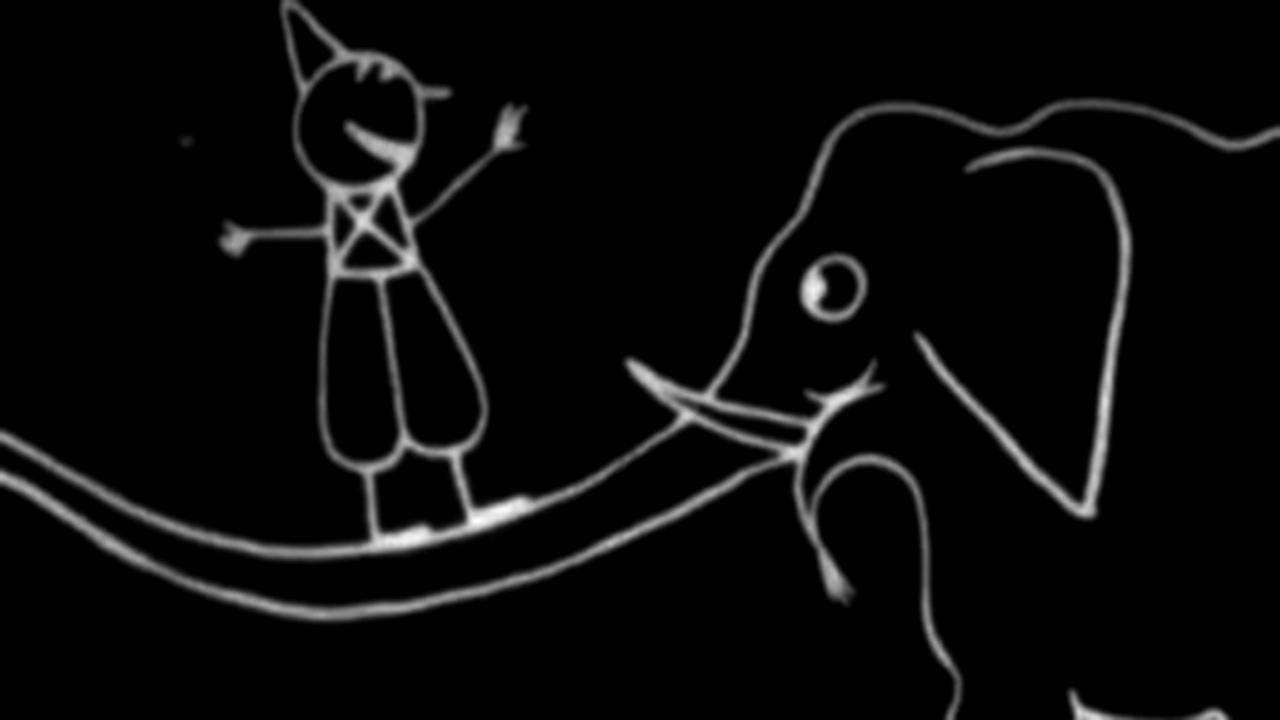
Animation had been washed in "film" before, but information technology hadn't really been washed in what nosotros now telephone call traditional (hand-drawn) animation. In fact, HUMOROUS PHASES itself doesn't really fall into that category. HUMOROUS PHASES is a product of stop-motion and cutout techniques; they had been displayed in some form since the 1890s. The first traditionally animated picture is FANTASMAGORIE (1908), which I'll write nearly later. But some form of animation goes back to the near showtime of movie, and from some of the fine art course's earliest cinematic pioneers.
The thought of "moving pictures" comes before motion picture, when magic lanterns and other optical trick devices would "breathing" drawings and images, creating motion. That's the footing of film itself, just of course we don't refer to animation simply equally the rapid flashing of nevertheless images (or frames) into motion. Implied in the current term of animation is the manipulating of things that can't move into, well, moving, whether it be drawings or tactile, real-world items. In fact, the latter, what we at present call stop-motion animation, had a stronger tradition in the brusque history of motion-picture show past the fourth dimension FANTASMAGORIE came out.
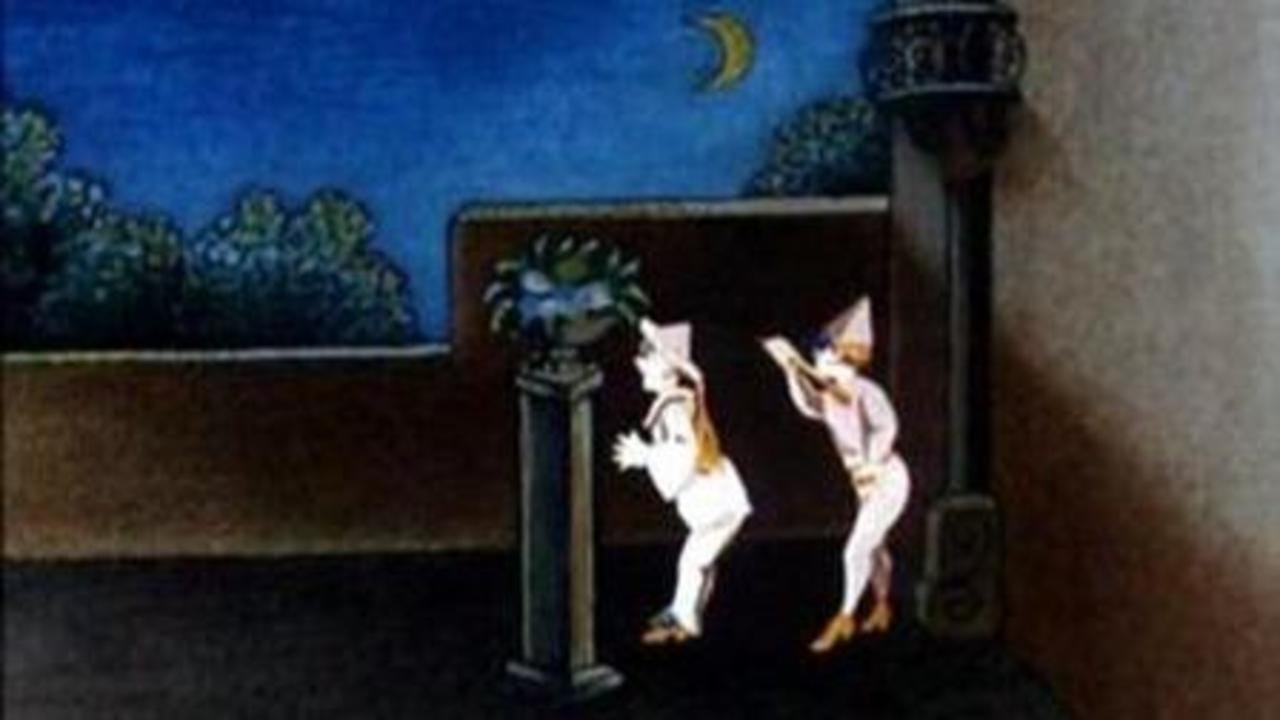
However, some of the earliest experiments in animation came from a pair of my favorite films from before 1900, PAUVRE PIERROT (1892) and AUTOUR D'UNE CABINE (1894). They were made by French moving-picture show pioneer Charles-Émile Reynaud, whose praxinoscope device was an offshoot of the formative zoetrope. It spun a series of images effectually a spinning cylinder, shining light from the center to projection the images, and the movement they simulated, outwards. Since the images were drawn by Reynaud, rather than photographed, his films were essentially animated, in the traditional sense of the word.
The films, as they appear at present, are rendered in a way we sympathize films now, but the way they were presented definitely did not run as smoothly, nor were they even made on film. Notwithstanding, they are an important role of the "pictures," and as indicated by my including it on my favorite films list, should be considered as such. But their "shortcomings" also strengthen the instance of HUMOROUS Phase'southward landmark condition…except for another film, made six years earlier past HUMOROUS PHASES director J. Stuart Blackton himself.
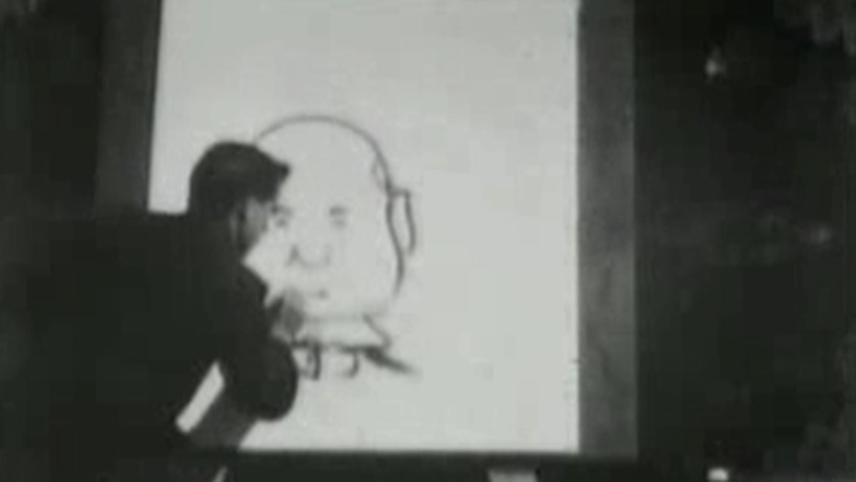
Blackton, substantially "the male parent of American animation," is actually a pretty pregnant figure from the entire early film industry. Originally a reporter/entrepreneur from Britain, American immigrant Blackton interviewed Edison near his fancy new moving pictures and was coerced into buying a photographic camera and a set of films to showroom. Along with his partner Albert E. Smith, Blackton before long branched out into making films himself, creating American Vitagraph Company in 1897. It would become Vitagraph Studios, ane of the leading studios in the American film industry until almost the mid-1910s; it was purchased by Warner Bros. in 1925.
Besides making a proper name for itself with newsreels (propaganda) of the Spanish-American War (supplemented by staged studio scenes), some of Vitagraph'south later big hits were literary adaptations, frequently directed by Blackton himself. His primeval successes, however, toyed more than specifically with finish-motion animation. Blackton would later look back on his little experiments as non-expert and inconsequential, merely his 1900 movie THE ENCHANTED DRAWING may beat out out HUMOROUS PHASES as the commencement animated pic recorded on standard flick film…if you consider brief animated sequences in a minute-and-a-half alive action motion-picture show an animated film.
THE ENCHANTED DRAWING showed Blackton drawing a man on an easel, and with little substitution splices, his drawings would become real world items or the human'southward expression would change. This technique was perfected, if not invented, past Georges Méliès, but most entirely with alive-activeness subjects. These splices were used to create magical effects, and the substitution in THE ENCHANTED Drawing is no different.
Film was playing with ideas that couldn't exist done in any other medium, even if they look elementary at present. THE ENCHANTED Drawing, likewise, established a common trend of animation films beingness presented, in the narrative, equally the creation of an creative person, rather than worlds of their own. This tendency would continue with HUMOROUS PHASES itself, Winsor McCay'due south 1910s masterpieces, and even into the 1920s with the Fleischer Brothers' OUT OF THE INKWELL series, a reliance on the vaudeville and trick pic traditions associated with filmmaking well into the 20th century.
In whatever event, THE ENCHANTED Drawing could probably not be accurately called an blithe pic. Information technology's primarily live-action, and its tricks are not dissimilar to those seen in Méliès' films, which are not considered animated in spite of common blitheness tricks being used in them. HUMOROUS PHASES OF FUNNY FACES, and so, looks like it deserves its somewhat intricate kickoff claim.
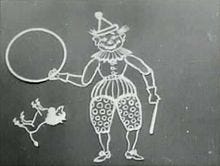
In spite of a hand flitting in and out frame to illustrate the events of the film, HUMOROUS PHASES is presented with the animation and cartoon as the focus. The three minute picture show is a serial of cursory "humorous" moments betwixt, primarily, a human being and a woman, presented on a chalkboard. The black background and distinctive white outlines of the drawings, while simplistic, is a bully, hitting look. The drawings themselves are fun petty caricatures, even if the film is non exactly hilarious. I guess humorous is fitting; the film is simply amusing.
Its place in animation history, a topic I am incredibly fascinated by, is another story. While its end-motion and cutout techniques create a stilted effect, the simple fascination with the motility of illustrated characters, seemingly of their own accord, is still fresh for a 111-yr-old motion picture. HUMOROUS PHASES OF FUNNY FACES would be improved upon quickly and essentially by other animation pioneers within even the adjacent v years, simply information technology's substantially the first animated picture show in the mode we could consider them today. That power and significance can't be understated, making it my 5th favorite 1906 pic.
Brand certain to grab up on and keep upward with all of my essays on my favorite films here.
Source: https://trettleman.medium.com/humorous-phases-of-funny-faces-the-first-animated-film-d2ac1fcf4e20
0 Response to "What Was the Art Work in Humorous Phases of Funny Faces Created With?"
Post a Comment